This article is part of an educational series created by Brunswick Remodeling to help homeowners in East Brunswick, New Jersey and surrounding areas make informed decisions about home remodeling and renovations. The information below is intended to provide clarity as you explore remodeling options, materials, timelines, and long-term value for your home. If you have questions or would like personalized recommendations for your project, we invite you to contact our team using the button below.
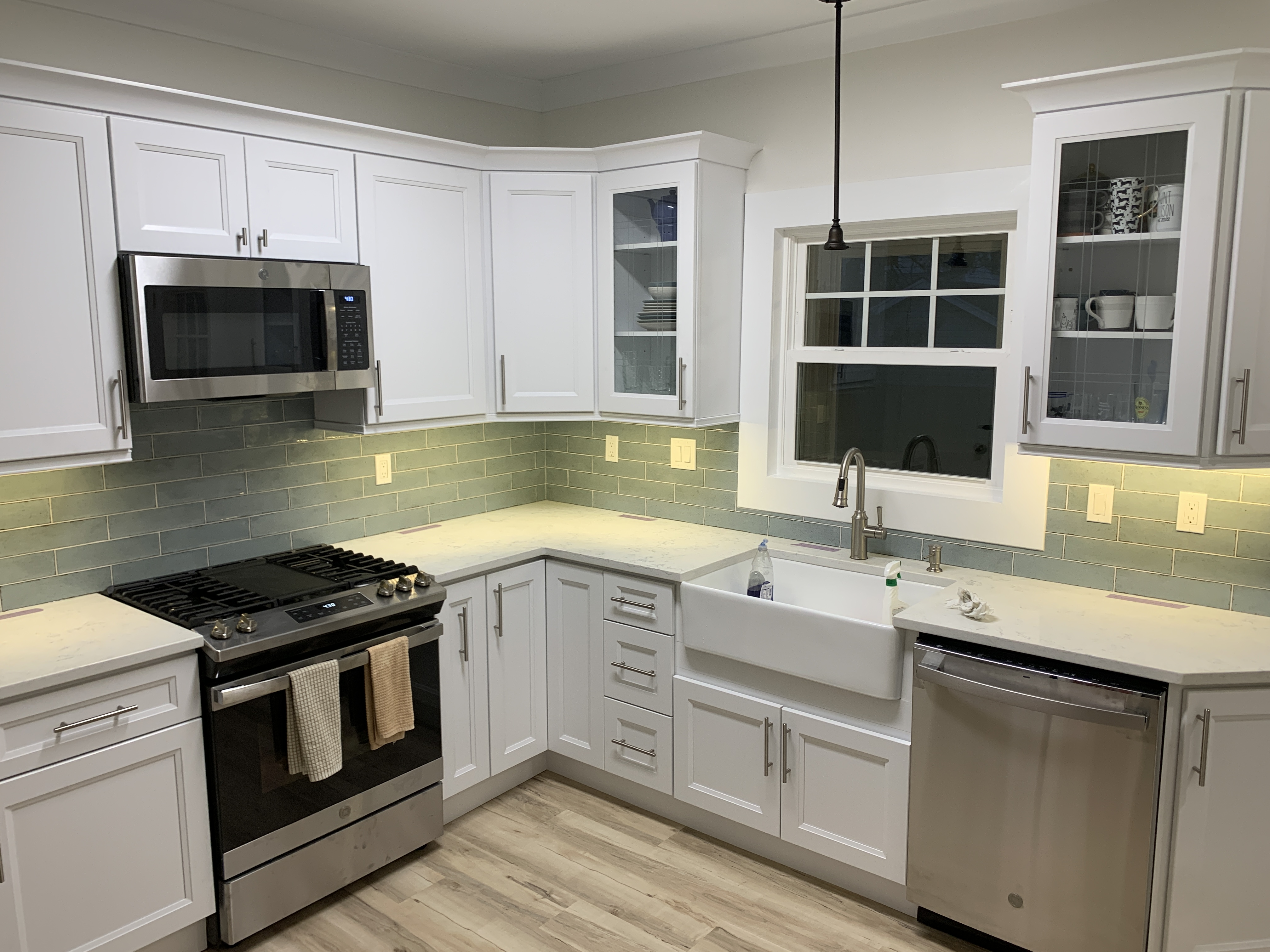
Things To Consider When Choosing New Kitchen Cabintets
You should evaluate style, material, storage, and budget to choose cabinets that balance aesthetics and function; prioritize durable construction, finish longevity, efficient layouts that suit your cooking habits, hardware quality, and professional installation, and compare warranties and maintenance needs so your investment enhances daily use and long-term home value.
Assessing Your Kitchen Space
Measure existing clearances and fixed elements before choosing cabinets: base cabinets are typically 24″ deep, wall cabinets 12″ deep, and standard countertop height is 36″. Allow 36-48″ aisle width (42″ is ideal for two cooks) and keep the sink, range and refrigerator triangle between 12-26 feet total. You can bring these dimensions to Brunswick Remodeling’s showroom at 40B Cotter Lane, East Brunswick, NJ, to compare cabinet styles, hardware and real-world clearance examples.
Measurement and Layout
Take wall-to-wall and ceiling measurements plus window, door and utility locations, then note appliance footprints including door swings; many stock cabinet widths come in 3″ increments from 9″ to 48″, so plan runs around 24″, 30″ and 36″ modules. Photograph the space, sketch existing plumbing/electrical positions, and check for load-bearing walls if you’re opening sightlines-these details determine whether you can shift cabinets or need filler pieces.
Traffic Flow and Accessibility
Position cabinets to preserve natural walkways and sightlines: keep main traffic lanes at least 36″ wide and service aisles 42″-48″ for multi-user kitchens, and place pull-out trash and everyday items near entrances for quick access. Consider lower pull-out drawers and full-height pantries to reduce bending, and stagger upper cabinet heights to maintain comfortable reach zones.
For deeper planning, map the work triangle with measured distances-each leg should typically be 4-9 feet and the total 12-26 feet-to avoid cross-traffic; if you have an island, allow 42″ clearance on main prep side and 48″ if appliances face each other. Also factor ADA-friendly adjustments: 30″x48″ clear floor space for wheelchair access and counters lowered to ~34″ where needed. Brunswick Remodeling can mock up layouts using your measurements to show how different cabinet depths and door swings impact real movement.
Cabinet Styles and Designs
You’ll choose from Shaker, slab, inset and raised-panel doors, plus glass-fronts or open shelving to set tone: Shaker suits transitional spaces, slab works for ultra-modern kitchens, and raised-panel feels formal. Consider how profiles pair with countertop materials and appliance finishes-matte quartz calls for cleaner lines, while marble favors more detail. Visit the Brunswick Remodeling showroom at 40B Cotter Lane to compare door samples, finishes and hardware in person.
Modern vs. Traditional
If you want sleek minimalism, modern cabinets use slab doors, integrated pulls or handleless designs, lacquer or thermofoil finishes and often feature full-extension soft-close drawers; typical lead times run 4-8 weeks for semi-custom pieces. In contrast, traditional cabinets favor raised panels, crown molding, glazed finishes and warm woods like cherry or maple, which hide wear but usually increase cost and installation complexity.
Custom vs. Stock Cabinets
You’ll weigh budget, timeline and fit: stock cabinets cost the least and can arrive in 1-2 weeks at roughly $60-250 per linear foot, semi-custom sits in the $200-600 range with 4-8 week lead times, and fully custom runs $500-1,200+ per linear foot with 8-16 week delivery. Materials, warranty and precise fit differ significantly, so base your choice on your layout and long-term plans.
Delving deeper, custom cabinets typically use plywood boxes, dovetail drawer construction and solid-wood faces for durability and tailor-made storage (pull-out pantries, appliance garages, built-ins). Stock units often use particleboard boxes and standard sizes, so you may need fillers or on-site adjustments. Semi-custom gives selective upgrades-better drawer boxes or face frames-making it a common compromise between cost, quality and the exact storage solutions you want.
Material Choices
Your cabinet material determines durability, maintenance and cost; plywood boxes with dovetail drawers resist warping and cost about $200-500 per linear foot for semi-custom builds, while MDF or thermofoil doors lower upfront expense but can chip. Consider humidity in East Brunswick, and ask Brunswick Remodeling about solid-wood face frames, painted finishes, or laminate options to match your lifestyle and expected lifespan.
Wood Types and Finishes
If you prefer traditional wood, species and finish change appearance and performance: oak and maple stand up to heavy use, cherry darkens with time for a warm look, and walnut reads high-end. You should weigh grain, hardness and staining behavior when planning stain or paint, and ask to see samples in your kitchen lighting before committing.
- Match oak for textured grain where scratches blend; choose maple for smooth, painted surfaces.
- Select stain samples under your true lighting and test cabinet doors for color shift over 30 days.
- Thou should confirm Janka hardness (maple ≈1450, oak ≈1290) to align scratch resistance with your usage.
| Oak | Open grain, durable (Janka ≈1290); stains evenly, great for traditional or rustic finishes. |
| Maple | Fine grain, hard (Janka ≈1450); excellent for painted cabinets and modern styles. |
| Cherry | Warm tone, softer (Janka ≈950); deepens with age-ideal for formal kitchens. |
| Birch | Close grain, stable (Janka ≈1260); cost-effective alternative with good paint adhesion. |
| Walnut | Rich color, moderate hardness (Janka ≈1010); premium look for focal cabinetry pieces. |
Alternative Materials
You can choose thermofoil, laminate, acrylic, stainless steel or painted MDF to reduce cost and maintenance; laminate runs roughly $60-200 per linear foot for stock cabinets, while stainless or acrylic panels raise price but offer decades-long durability. Ask your contractor about warranty differences and sample boards to judge texture and gloss levels.
Thermofoil and laminate resist stains and are easy to clean, typically lasting 10-20 years in normal households; engineered options like high-pressure laminate (HPL) withstand steam better than basic vinyl wraps. Stainless steel or powder-coated aluminum suit heavy-use, commercial-style kitchens and can last 25+ years with minimal care. Bring measurements and photos to Brunswick Remodeling’s showroom at 40B Cotter Lane, East Brunswick, NJ, or call (732) 266-0306 to compare real panels and get tailored cost estimates.
Functionality and Storage Solutions
Prioritize cabinet depth and internal layout to match how you cook: standard base cabinets are 24″ deep and 34.5″ high while uppers range 30-42″ tall, so choose shelf heights and drawer counts to fit mixers, baking sheets, and dinnerware. Combine full-extension undermount slides, soft-close hardware, and 32mm hole-system shelving for adjustability, and visit our East Brunswick showroom to test pull-outs and corner solutions in person at 40B Cotter Lane.
Innovative Storage Features
Consider pull-out pantries (18-36″ wide) for canned goods, blind-corner pull-outs or LeMans units to reclaim typically wasted corner space, and appliance garages or vertical lift fronts for stand mixers. Choose full-extension, 100% access drawers and integrated toe-kick drawers for baking trays; hardware brands like Blum or Grass offer soft-close and full-extension slides that improve access and longevity.
Organizing Systems
Use purpose-built inserts: adjustable drawer dividers, deep utensil trays, spice drawers with angled racks, and pull-out recycling centers sized for two 35-40L bins. Specify 32mm cabinet construction to allow 1″ shelf increments and consistent accessory placement, so you can rearrange shelves and organizers as needs change.
Measure your most-used items before finalizing layouts-plate stacks, 9×13 pans, and stand mixers dictate drawer depths and shelf spacing. For example, a 12″ shelf clearance fits most small appliances; vertical dividers should be spaced 3-4″ for baking sheets. Plan at least one deep drawer (10-12″ interior height) for pots and pans with dovetail construction and full-extension slides to handle 75-100 lb loads. Bring a list of your largest and most-used pieces to the showroom so you can test configurations and ensure the organizing systems match real-life use.
Budget Considerations
When you set a budget, factor in materials, labor, hardware and layout changes – cabinets alone can range from roughly $60 per linear foot for stock to $500+ for custom systems. Use resources like Your Ultimate Guide to Kitchen Cabinet Layouts to test layouts against price points, and visit Brunswick Remodeling at 40B Cotter Lane, East Brunswick, NJ to compare samples and get local estimates.
Determining Your Budget
You should base your cabinet budget on the total remodel: cabinets typically account for 25-40% of the project. Add 10-15% contingency for unexpected costs. For example, a $30,000 remodel implies $7,500-$12,000 for cabinets; upgrading to semi-custom might push that toward $15,000, while refacing or repainting can keep costs near the low end.
Cost vs. Value
You’ll want to balance upfront cost with longevity and resale appeal: plywood boxes, full-extension soft-close drawers and quality hinges add to initial cost but reduce maintenance and impress buyers. Refacing often costs about 50-70% of full replacement and can be a smart middle ground if your layout stays the same.
Dig deeper by comparing specific choices: solid-wood doors increase price but last decades, MDF painted doors are cheaper but may need touch-ups, and dovetail drawer construction plus undermount slides raise durability and perceived value. Expect midrange kitchen upgrades to recoup roughly 60-80% of their cost at resale, so investing in proven construction and finishes often delivers the best long-term return.
Hardware and Accessories
Choose hardware that balances function and style: knobs often measure 1″-1.5″ (25-38 mm) while pulls commonly use 3″ (76 mm), 5″ (128 mm) or longer center-to-center layouts for islands. Mix stainless steel, brass, or zinc alloys to match countertops and fixtures. You can test finishes and ergonomics at Brunswick Remodeling’s East Brunswick showroom to ensure grip, clearance, and visual scale align with your cabinet design.
Knobs, Pulls, and Handles
Pick knobs for compact Shaker doors and longer bar pulls for wide drawers; a 1″ knob reads classic while a 10″ bar anchors an island. Finishes like matte black, brushed nickel, and antique brass change perceived scale and maintenance needs-fingerprints show more on polished chrome. You should try different finger clearance and backplate options, and ensure you select center-to-center measurements that align with predrilled holes or plan for drilling offsets.
Soft-Close Mechanisms
Integrated soft-close hinges and drawer slides from brands like Blum, Hettich, and Salice use hydraulic dampers to stop slamming and cut noise; they perform best on full-extension undermount slides that offer 100% access. You’ll notice smoother operation on heavy drawers and reduced wear on cabinet frames, and many systems allow simple tension adjustments during installation to fine-tune closing speed.
Hydraulic, pneumatic, and mechanical damper designs differ in response and longevity; hydraulic dampers are common and tolerant of temperatures in typical kitchens. You can retrofit soft-close on many existing cabinets with kits or replace slides-test by closing loaded drawers to confirm consistent deceleration. Also check load ratings (many undermount slides support 100-150 lb) and note that extreme overload or misalignment will impair the damper’s function.
Conclusion
Now assess your budget and how durable the materials must be, define your storage and layout needs, choose door style and hardware that suit your taste, and verify construction quality and warranty; coordinate cabinets with countertops, appliances, and lighting so your kitchen performs well and reflects your personal style.